Indian Motorcycle
The Story of America's First Motorcycle Company
From a bicycle racer and a Swedish immigrant building powered pacing machines in Springfield, Massachusetts, to the largest motorcycle manufacturer in the world, a world war, bankruptcy, a half-century of false restarts, and a modern rebirth under Polaris — and the century-long rivalry with Harley-Davidson that defined American motorcycling.
Contents
- 01The Founders: Hendee, Hedstrom, and the First Machines (1897–1903)
- 02The World's Largest Motorcycle Maker (1904–1913)
- 03Racing Dominance and the Isle of Man (1908–1914)
- 04World War I and the Seeds of Decline (1914–1919)
- 05The Rivalry Begins: Harley-Davidson Takes the Lead (1920–1929)
- 06The Scout, the Chief, and the Four (1920–1935)
- 07The DuPont Years and the Great Depression (1930–1939)
- 08Racing Wars and the Class C Era (1934–1939)
- 09World War II Production (1940–1945)
- 10Postwar Collapse and the End of Springfield (1945–1953)
- 11The Name Lives On: Rebadges and False Starts (1955–1997)
- 12Gilroy and Kings Mountain (1998–2011)
- 13Polaris, the Relaunch, and the Renewed Rivalry (2011–2025)
- 14Independence: Carolwood and Today (2025–2026)
- 15The Rivalry with Harley-Davidson in Perspective
- 16Bibliography & Sources
The Founders: Hendee, Hedstrom, and the First Machines (1897–1903)
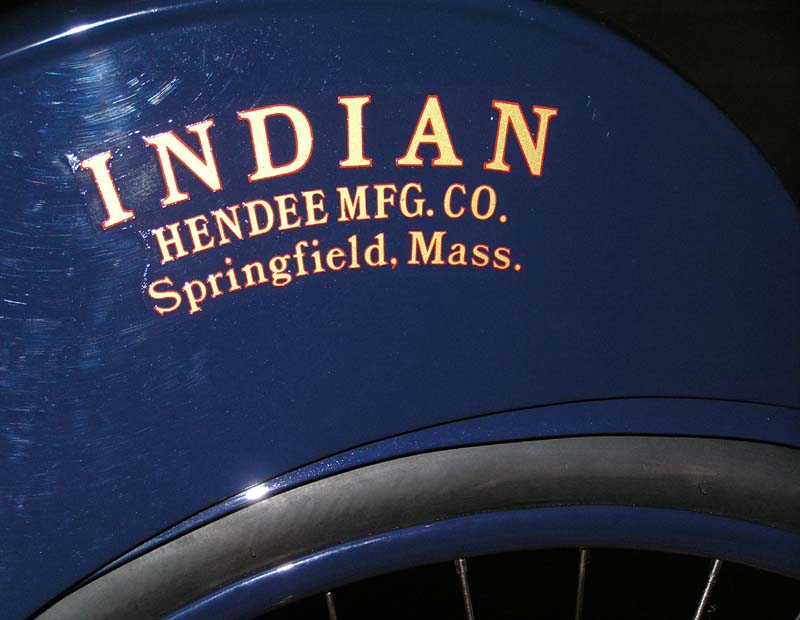
Indian Motorcycle is the oldest American motorcycle marque, and its story begins not with motorcycles but with bicycles. In 1897, George M. Hendee — a former champion bicycle racer who had won 302 of the 309 races he entered in his youth — founded the Hendee Manufacturing Company in Springfield, Massachusetts, to build bicycles sold under the "Silver King" and "Silver Queen" names. Hendee adopted the brand name "American Indian," soon shortened to just "Indian," from 1898 onward because it traveled well in export markets.
_-_The_Art_of_the_Motorcycle_-_Memphis.jpg)
The partnership that created the motorcycle was formed at a bicycle race at Madison Square Garden. Hendee was impressed by a motorized bicycle built to pace races, and he sought out its builder: Oscar Hedstrom, a Swedish immigrant and gifted engineer who designed and cast his own engines in a small shop in Middletown, Connecticut. The two teamed up, and Hedstrom built the first Indian prototype, completed on May 25, 1901. Its first public demonstration was held on Cross Street in Springfield at noon on June 1, 1901.
The early Indian was, in effect, a bicycle with a small gasoline engine attached — but it had two unusual features: an all-chain drive at a time when most machines used belts, and a streamlined frame. Three machines were built in 1901, and the first production models were sold to the public in 1902, the year Hendee hired Hedstrom as chief engineer. In 1903, Hedstrom set a world motorcycle speed record of 56 mph and rode from New York City to Springfield and back to prove the machine's reliability. In 1904, the company introduced the deep red color that would become Indian's trademark. A young Milwaukee firm called Harley-Davidson, founded the same year the Indian first went on sale, was about to become its rival for the next century.
The World's Largest Motorcycle Maker (1904–1913)
Indian's growth in its first decade was phenomenal. Production climbed from a few hundred machines a year to:
By 1911, Indian was the largest motorcycle manufacturer in the world. In the record year of 1913 the entire American industry built about 71,000 machines, and Indian alone accounted for a 41 percent market share with its 31,000 to 32,000 motorcycles. Its closest competitor, Harley-Davidson, built roughly 13,000. Indian's success rested on engineering: chain drive, a diamond frame, and engines built under license from the Aurora Firm until Indian brought engine production in-house in 1906.
The company's stature made Springfield, Massachusetts, the center of the global motorcycle business. But its dominance would not last. The year 1913 also marked the beginning of its difficulties: chief engineer Oscar Hedstrom resigned, and within a few years the founding partnership that had built the company would be gone.
Racing Dominance and the Isle of Man (1908–1914)
Indian used racing as its primary advertisement. Hedstrom's 8-valve production racers were the first in the world, built to solve the valve and heat failures that plagued long-distance racing — and the extra speed was a welcome bonus.
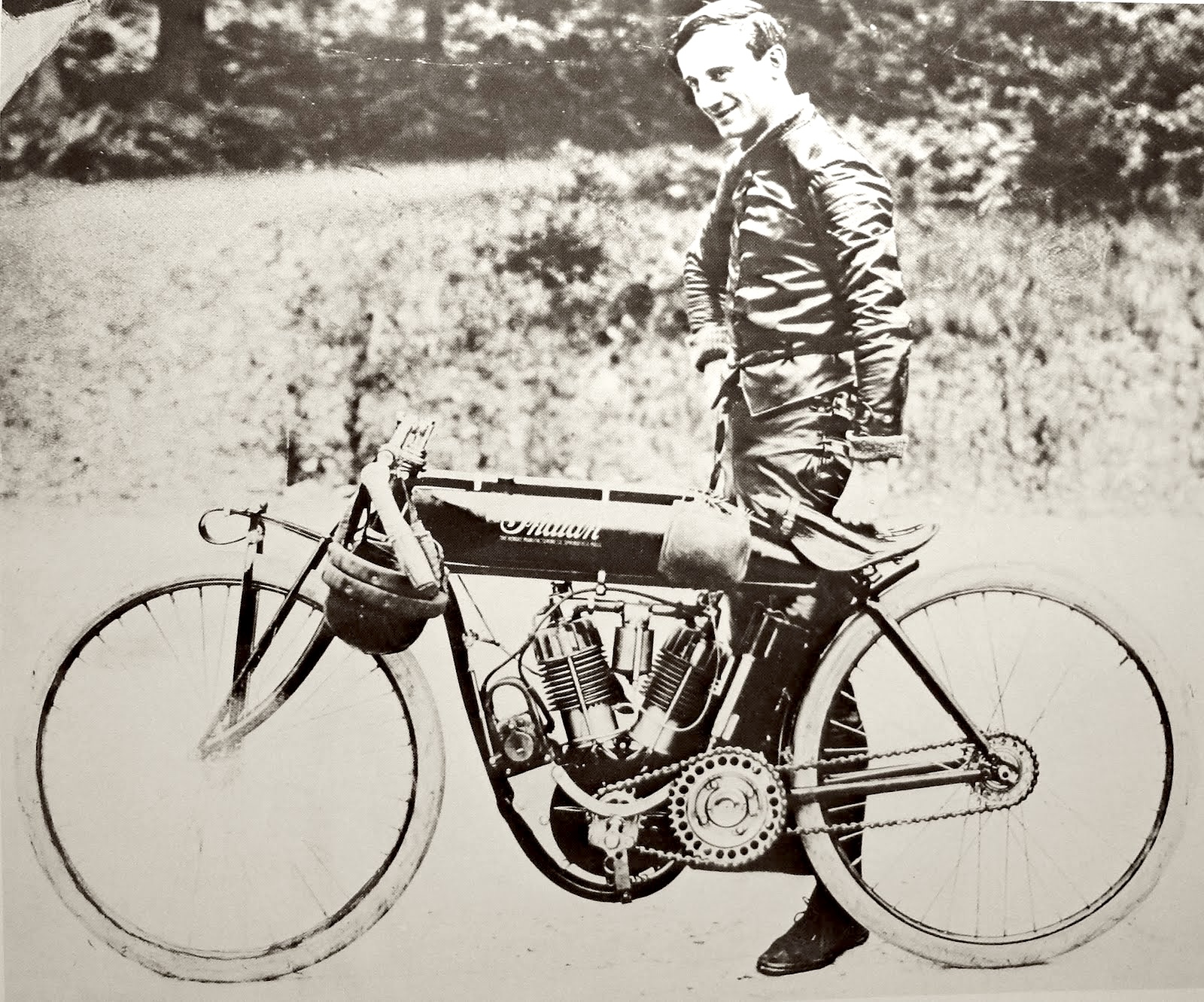

The crowning achievement came in 1911 at the Isle of Man Tourist Trophy, the most famous race in the world. Indian's red V-twins, equipped with two-speed transmission and all-chain drive, swept the event, taking the first three places — a finish without precedent in the history of the TT. The feat made Indian the benchmark of the era and, at home and abroad, gave the marque a reputation for performance that no American builder could match.
Indian also pursued speed records. In 1914, the legendary endurance rider Erwin "Cannon Ball" Baker crossed America on an Indian in 11.5 days — a transcontinental feat that became part of the company's lore. On the board tracks and dirt ovals of the period, Indian and its rivals traded wins, but through the early 1910s no American company could match the red machines from Springfield.
World War I and the Seeds of Decline (1914–1919)
The First World War transformed the American motorcycle industry — and set Indian on a path that would cost it its leadership. With the United States moving toward war, the industry's "Big Three" — Indian, Harley-Davidson, and Excelsior — pledged to support the military. Indian over-committed, dedicating virtually all of its production to government contracts without properly costing them.
The consequences were severe. Dealers were starved of machines, so the civilian market that Indian had dominated dried up; profits on the war contracts proved far smaller than expected. George Hendee, powerless to stop the damage, retired in 1916. Harley-Davidson, by contrast, managed the balance between military and civilian sales more shrewdly and kept its dealers happy. When the war ended and American factories stopped making motorcycles, both companies found themselves with capacity for 30,000 machines a year but a market that could not absorb half that — cheap automobiles had arrived, and motorcycle demand collapsed.
By the end of the decade, Indian's era of unchallenged supremacy was over. The founder and the engineer who had created it were both gone, and the company that entered the 1920s was a different organization fighting for its survival.
The Rivalry Begins: Harley-Davidson Takes the Lead (1920–1929)
The rivalry between Indian and Harley-Davidson — the two great American motorcycle marques — was forged on the racetracks of the early twentieth century and settled in the sales figures of the 1920s.
Harley-Davidson, founded in Milwaukee in 1903, had built only 450 machines in 1908 while Indian built 2,176 that same year. But Harley's managers proved shrewder operators. Its racing team, organized by Bill Ottaway and nicknamed the "Wrecking Crew," dominated the circuits; at the opening round of the racing war in 1919 at Ascot, California, Harley took the top five places. Harley also secretly employed the British engine expert Harry Ricardo to design better-breathing racers and kept them as factory secrets.
The decisive change came in the showroom. In 1922, Harley-Davidson surpassed Indian as the largest motorcycle manufacturer in the world. The two companies continued to race and advertise against each other through the decade — Indian won every major championship in 1928 and 1929 — but the commercial advantage had shifted permanently. Ford's Model T was now cheaper than many motorcycles, and the market for new machines was dominated by wealthy enthusiasts rather than the everyday riders Indian had once commanded. The rivalry between the two brands, which had begun as a fight for the future of motorcycling, had become a fight for survival.
The Scout, the Chief, and the Four (1920–1935)
Even as Harley took the commercial lead, the 1920s produced Indian's most celebrated machines — the models that define the marque to this day.
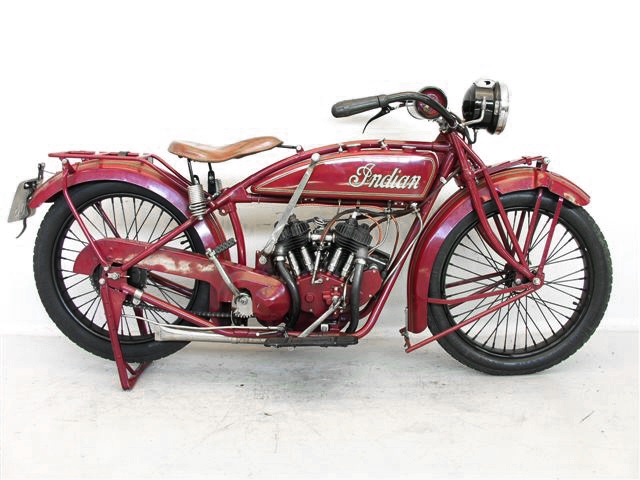

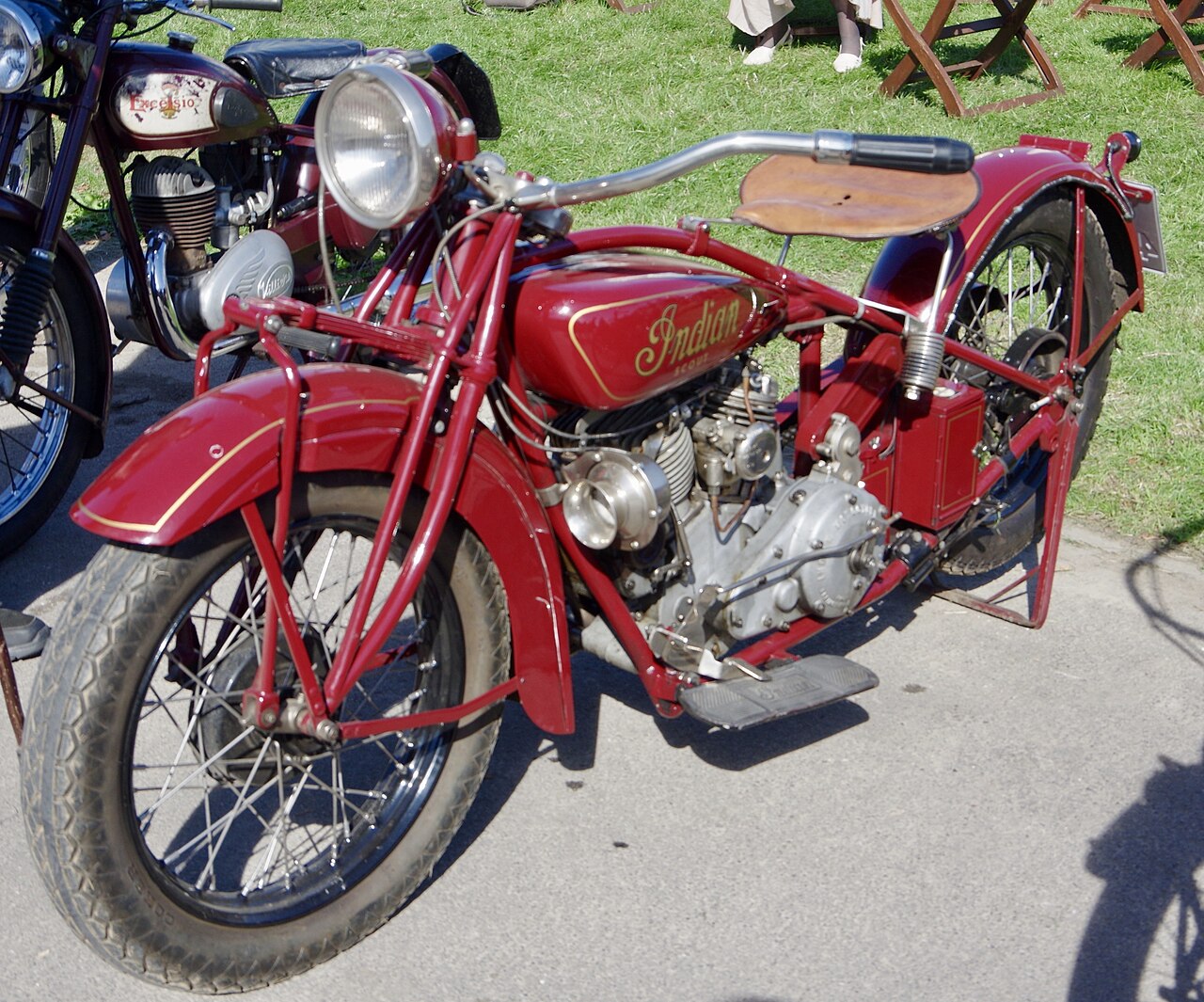
The Scout arrived in 1920, designed by the Anglo-Irish engineer Charles Franklin. It was hailed as America's first fully integrated modern motorcycle design: a 600cc-class V-twin that carried only 60 percent of a big twin's displacement yet ran nearly as fast, weighed about 100 pounds less, and was overengineered, reliable, and easy to work on. It became the best American motorcycle of its era and could be raced or toured with equal ease. In 1928, the legendary Scout 101 version became the sporting benchmark of the Roaring Twenties.
.jpg)
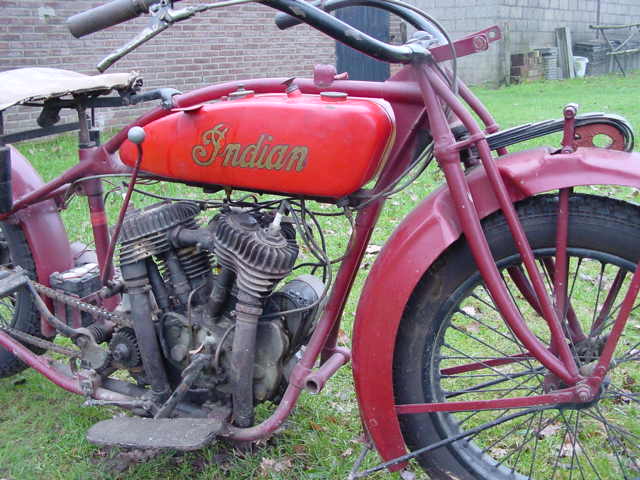

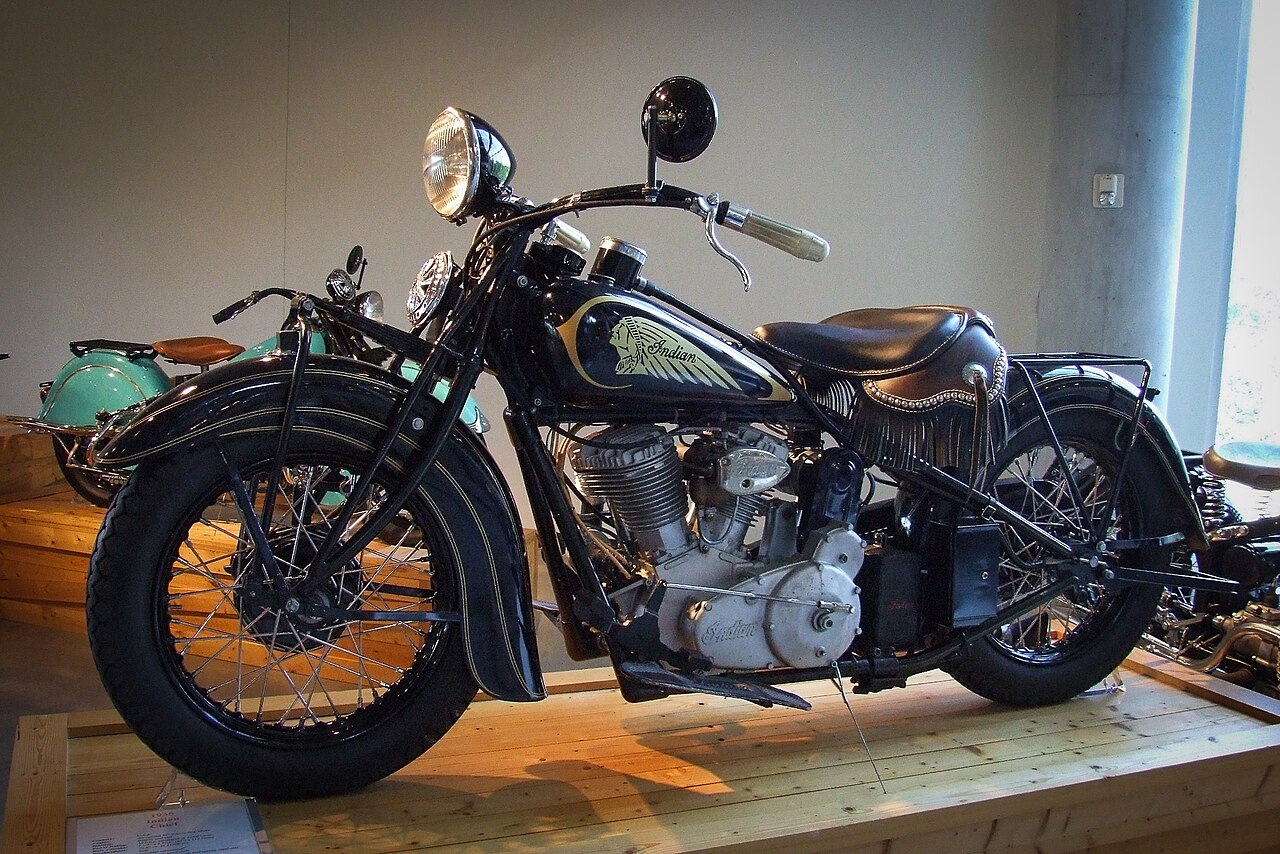
The Chief, introduced in 1922 as an enlarged Scout with a 61-cubic-inch (1,000cc) V-twin, grew into Indian's flagship. A 74-cubic-inch (1,200cc) Big Chief followed in 1923. Through the 1930s the Chief gained the deep valanced fenders, skirted mudguards, and flowing streamlining that made Indian's big twins the most beautiful American motorcycles of the era — and its plunger rear suspension in 1940 an early form of modern rear travel.
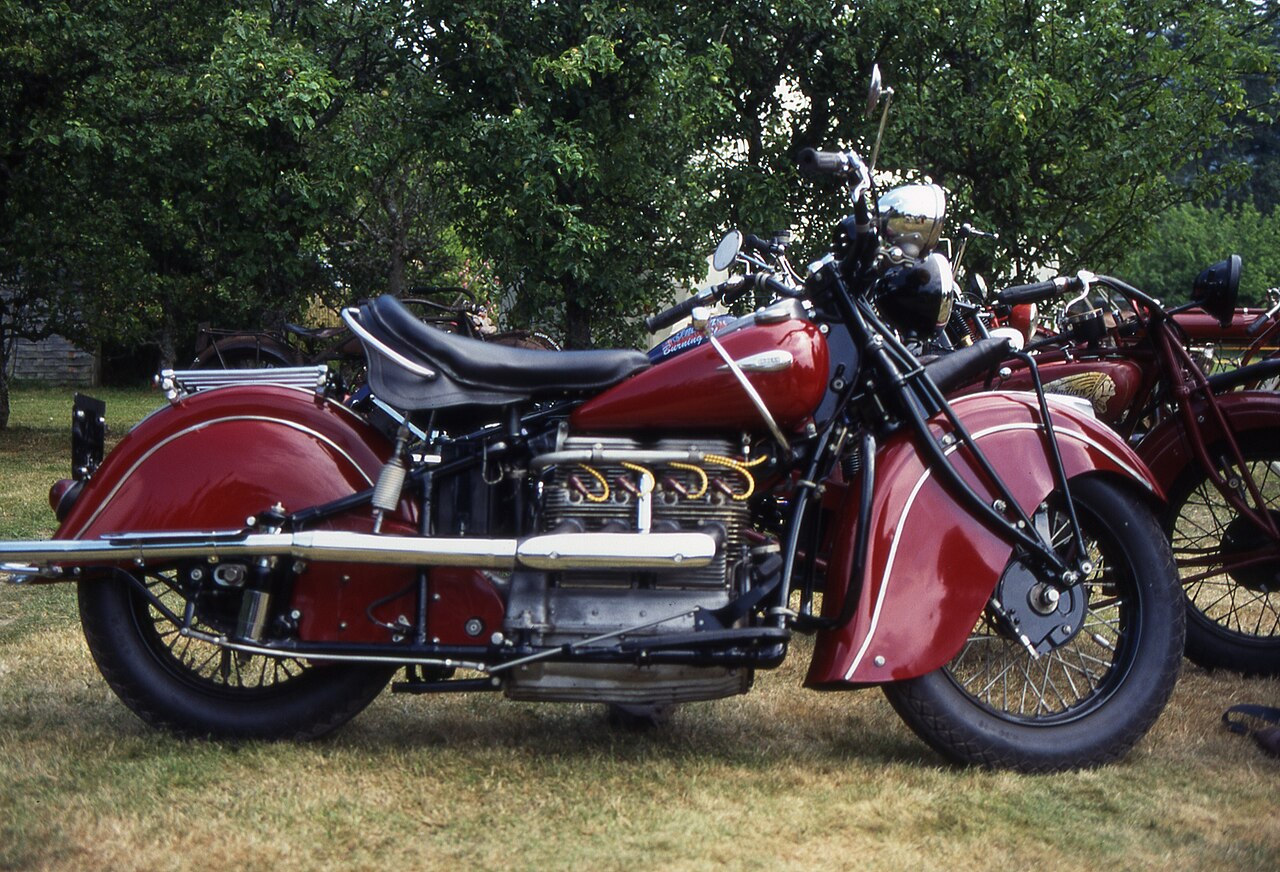
In 1927, Indian bought the Ace four-cylinder company and relaunched its inline four as the Indian 401 the following year. Refined through the decade into the famous Indian Four — with its distinctive "upside-down" in-line engine from 1936 onward — it was one of the smoothest and most luxurious American motorcycles ever built, and its production would continue until 1942.
The DuPont Years and the Great Depression (1930–1939)
The stock market crash of 1929 and the Great Depression devastated the motorcycle industry. Excelsior-Henderson closed in 1931, leaving Indian and Harley-Davidson as the only two American manufacturers — a two-brand battle that would define the American market for decades.
Indian found a wealthy rescuer: in 1930, E. Paul duPont, the wealthy industrialist, took over the beleaguered company, which merged with Du Pont Motors. DuPont's money and management kept Springfield alive through the worst years of the Depression, when the entire industry shrank to a fraction of its former size and Indian's own production fell to a few thousand machines a year.

Under DuPont, Indian continued to refine its lineup. The Chief received deeper valanced fenders and more streamlining; the Scout line grew into the popular Sport Scout; and the Four became the flagship luxury machine. But the company struggled against Harley-Davidson's Knucklehead, introduced in 1936, which made most other American motorcycles — including, for a time, the redesigned Indian Four — look dated overnight. Indian entered the late 1930s as a strong but distant second to Milwaukee.
Racing Wars and the Class C Era (1934–1939)
The 1930s brought the rivalry to its peak. With Excelsior gone, spectators chose sides: it became a matter of rooting for Indian or rooting against Harley-Davidson. The American Motorcycle Association created a new Class C racing formula in 1934 for production-based bikes, and the new class proved a remarkably even contest — Harley fielded more machines while Indian fielded fewer, faster Scouts.
Indian's great hero of the era was Ed Kretz, the hard-charging "Iron Man." He won the inaugural Daytona 200 in 1937, lapping the entire field of 86 riders — and won again at Laconia in 1938 despite crashing twice, jamming sand in his carburetor, and losing a footboard mid-race. Harley-Davidson countered with riders such as Sam Arena and, in 1937, set an American land-speed record of 136.18 mph with a racing Knucklehead at Daytona Beach. Indian had won all the major championships in 1928 and 1929; now, in the Depression years, the two brands traded wins and titles in front of large and passionate crowds. The racing wars of the 1930s cemented the Indian-Harley rivalry as the defining contest in American motorcycling.
World War II Production (1940–1945)
The Second World War was a second great test, and this time both companies were ready. With Europe at war, the U.S. government asked Indian and Harley-Davidson to build machines to match the German BMWs — first 1,000 experimental examples from each, then full production on a cost-plus basis.

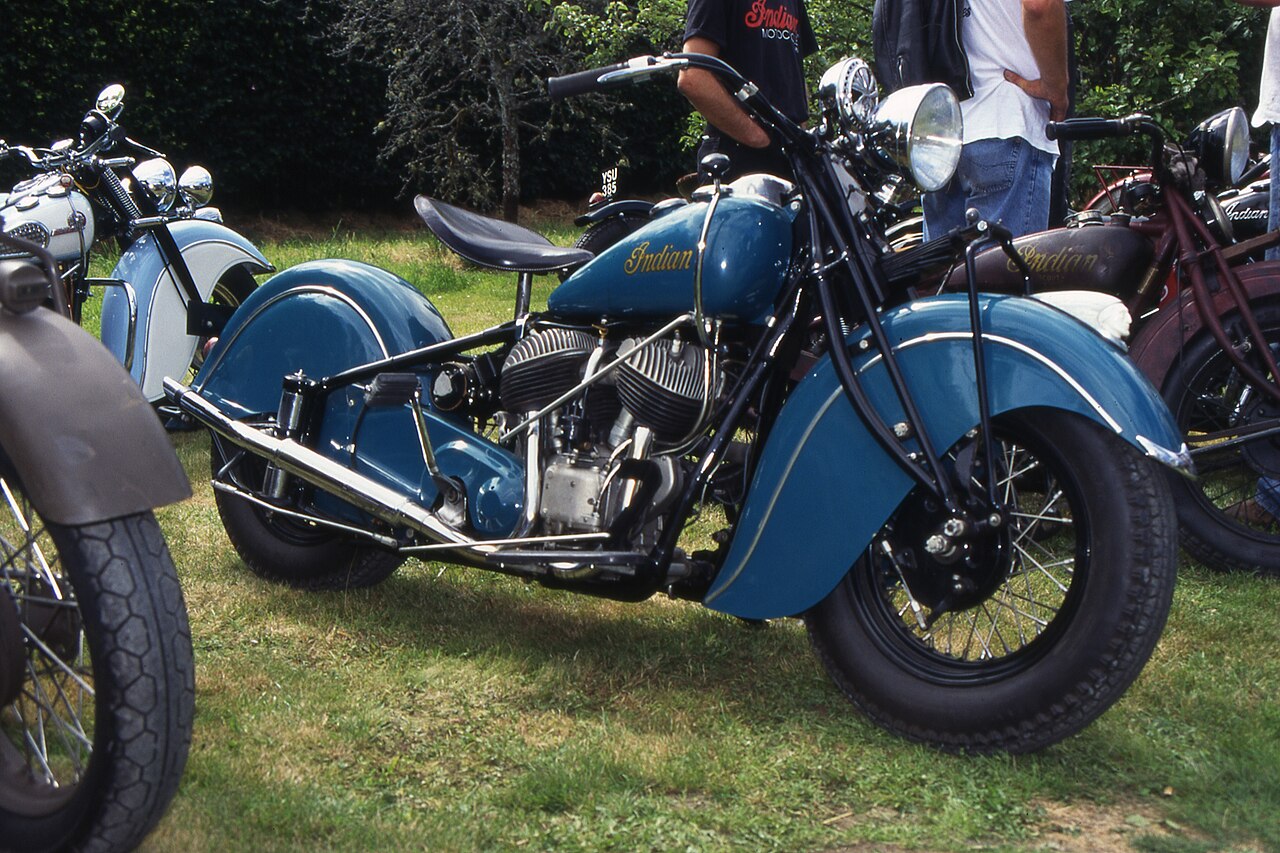

Indian produced about 42,000 motorcycles for the war effort. The bulk were the 500cc Model 741, alongside 340/344 sidecar rigs, the 45-cubic-inch Scout-based 640 series, and the remarkable Model 841 — a 90-degree V-twin mounted across the frame with shaft drive, developed to the War Department's specification and a likely inspiration for the postwar Moto Guzzi twins. About 3,000 Indian machines went to France. Harley-Davidson, for comparison, built more than 89,000 of its 45-cubic-inch WLA and WLC models, plus parts for thousands more, and developed its own shaft-driven BMW-inspired XA.
War production was a boom — Indian's wartime output tripled its 1930s levels — but it also wore out tooling that dated to the 1920s, and it left both companies facing the brutal postwar transition back to civilian markets.
Postwar Collapse and the End of Springfield (1945–1953)
Indian's postwar years were a slow collapse. In 1945, controlling interest in the company was sold and consolidated into the Torque Engineering Company under new management. The new leadership bet on a clean-sheet design — a modern vertical twin — rather than continuing the beloved big V-twins, and the bet failed. Development money was poured into the new twin while the Chief, Scout, and Four lineups stagnated, and by the time the new models reached dealers the company had lost its market.
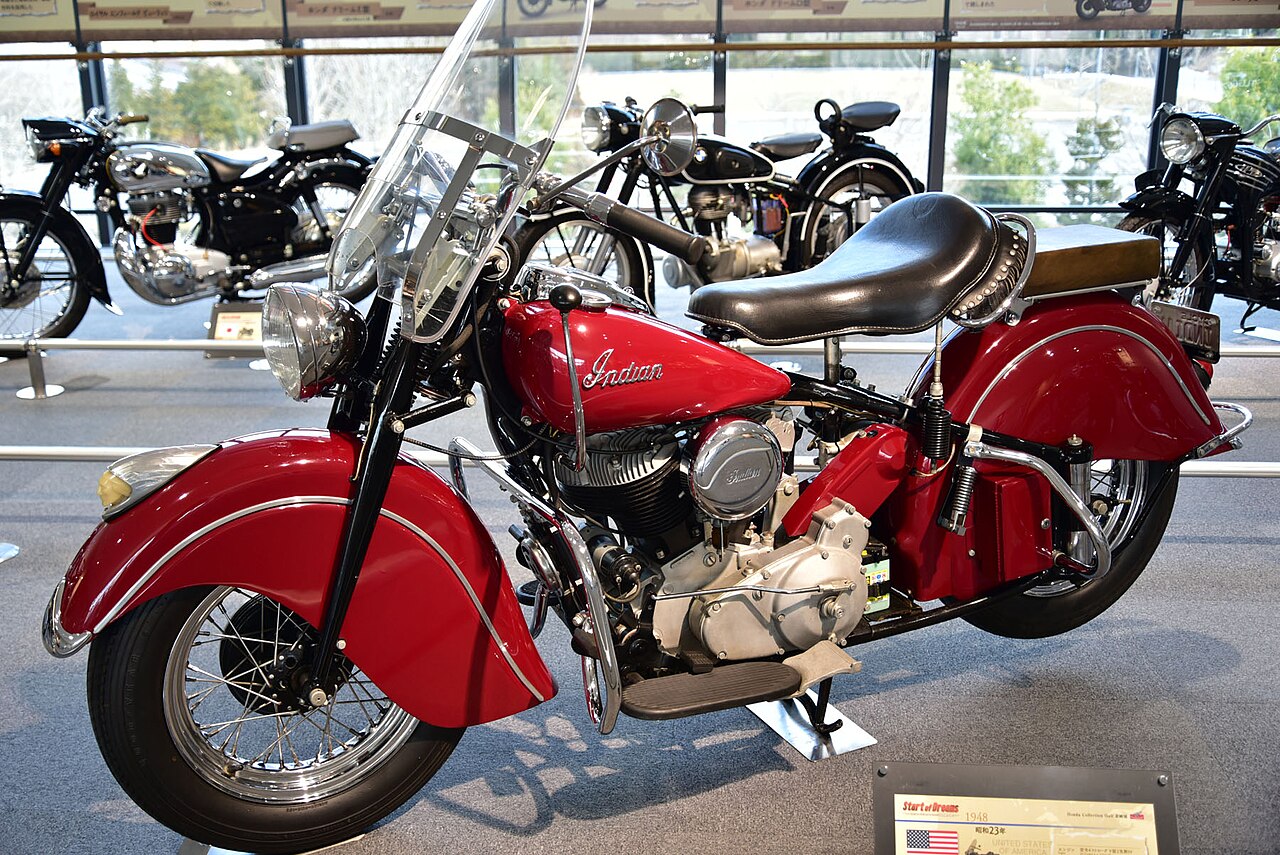

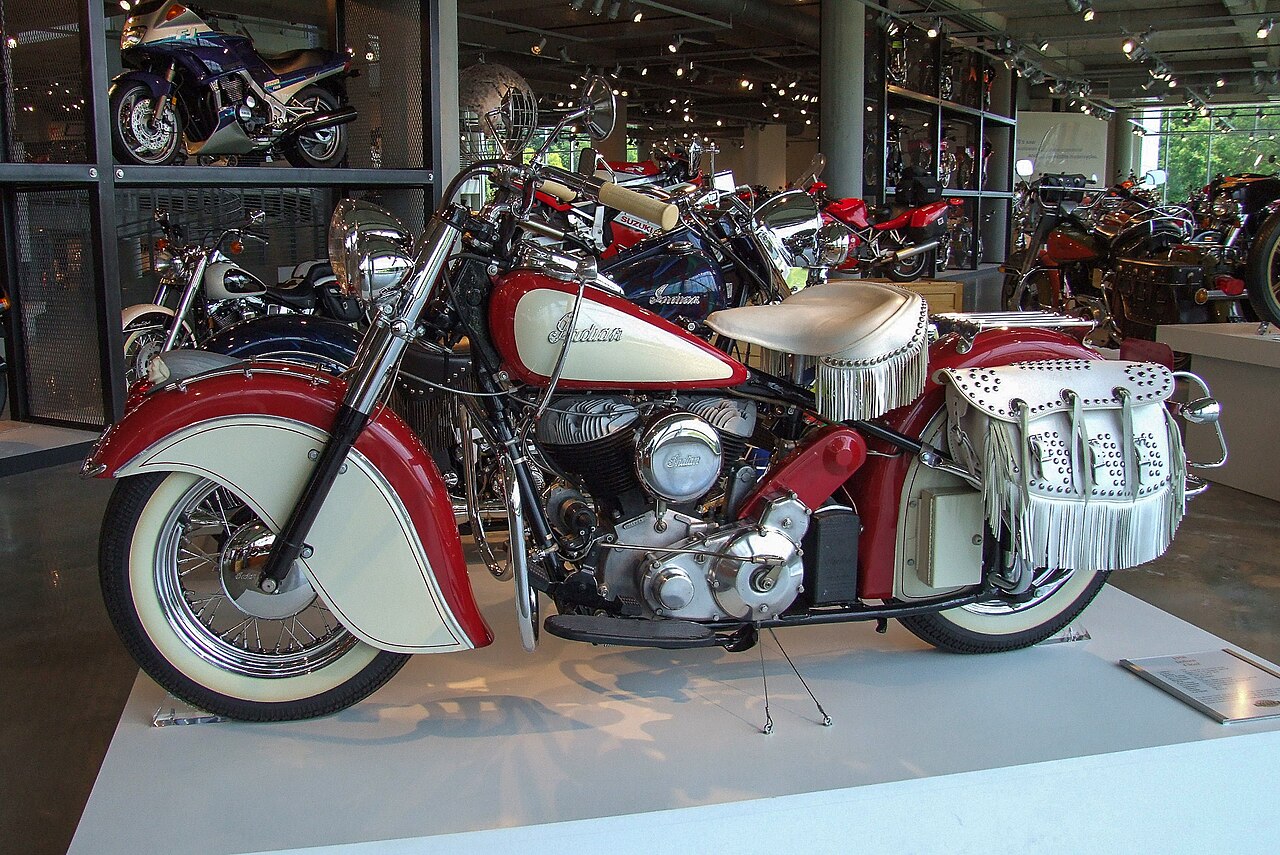

The late 1940s brought a few bright moments: the war bonnet fender ornament and chrome trim debuted in 1947, and Floyd Emde won the first Daytona 200 on the new beach/road course in 1948. But the company was losing money and credibility. The Chief limped on — enlarged to 79 and then 80 cubic inches (about 1,300cc) in 1950-51 — built in increasingly tiny numbers. On September 19, 1953, Indian ceased production, closing the Springfield factory that had once made the city the motorcycle capital of the world. Only about 2,000 of the final Chiefs were made. Harley-Davidson, which had managed its wartime and postwar business more carefully, was now the last American motorcycle manufacturer.
The Name Lives On: Rebadges and False Starts (1955–1997)
For half a century after 1953, the Indian name was kept alive by a succession of owners who used it on machines that were not really Indian motorcycles at all:
• In 1955, the British firm Brockhouse Engineering bought the rights and sold rebadged Royal Enfield motorcycles under the Indian name for about five years.
• In 1960, the British Associated Motor Cycles acquired the rights; the company went into liquidation in 1962.
• In 1963, the American publisher Floyd Clymer began selling Italian-built Italjet minibikes (the "Papoose") with Indian branding, apparently without clear legal rights to the trademark. After Clymer died in 1970, attorney Alan Newman carried on selling rebadged Italian two-strokes until bankruptcy in 1977.
• The 1990s produced a string of disputed claims and false starts — Philip Zanghi's license claims, Wayne Baughman's prototype in New Mexico, and the Eller Industries plan to build bikes on Oregon tribal land with an engine from Roush Industries. None produced a real motorcycle.
The one great exception to this era of decline was Burt Munro, the New Zealand enthusiast who took his 1920 Indian Scout to the Bonneville Salt Flats and, in 1967, set an under-1000cc land-speed record of 183.586 mph — a mark that remains unbeaten and made the Scout immortal.
Gilroy and Kings Mountain (1998–2011)
The first serious attempt to build real Indian motorcycles again began in California. After a federal court in Colorado awarded the trademark rights in 1998, the Indian Motorcycle Company of America was formed from a merger of nine companies and began production in Gilroy, California in 1999. The first "Gilroy Indian" was a new Chief, powered at first by off-the-shelf S&S V-twins (a Harley-style clone engine) and from 2002 by Indian's own 100-cubic-inch Powerplus. A Scout and Spirit followed. The company built roughly 12,000 motorcycles before a backer pulled out and it filed for bankruptcy, halting production in September 2003.
In 2004, the assets were bought by Stellican Limited, a London-based private-equity firm run by Stephen Julius, who had previously revived the Chris-Craft boat brand. Stellican announced in July 2006 that production would move to Kings Mountain, North Carolina, where the company built a limited number of redesigned Chiefs with an enlarged 105-cubic-inch (1,720cc) fuel-injected Powerplus engine. The Kings Mountain Indians were built for exclusivity rather than volume — but the global financial crisis of 2008-09 crushed demand for expensive cruisers just as the relaunch began, and Stellican could not sustain it.
By the end of the decade, Indian was a storied but nearly dormant brand. What it needed was a manufacturer with real resources, and in April 2011 it found one: Polaris Industries.
Polaris, the Relaunch, and the Renewed Rivalry (2011–2025)
Polaris Industries, the Minnesota maker of snowmobiles and off-road vehicles that also owned the Victory Motorcycle brand, acquired Indian in April 2011 and moved production to its factory in Spirit Lake, Iowa. Polaris invested tens of millions of dollars in development, and in March 2013 unveiled the all-new Thunder Stroke 111 V-twin — an air-cooled 111-cubic-inch (1,811cc) engine with pushrods and traditional finning, built on an aluminum frame. On August 3, 2013, at the Sturgis Motorcycle Rally, Indian launched three all-new Chief models: the Chief Classic, the Chief Vintage, and the Chieftain, Indian's first fairing-equipped "hard-bagger." They were designed, explicitly, to take on Harley-Davidson's touring lineup.
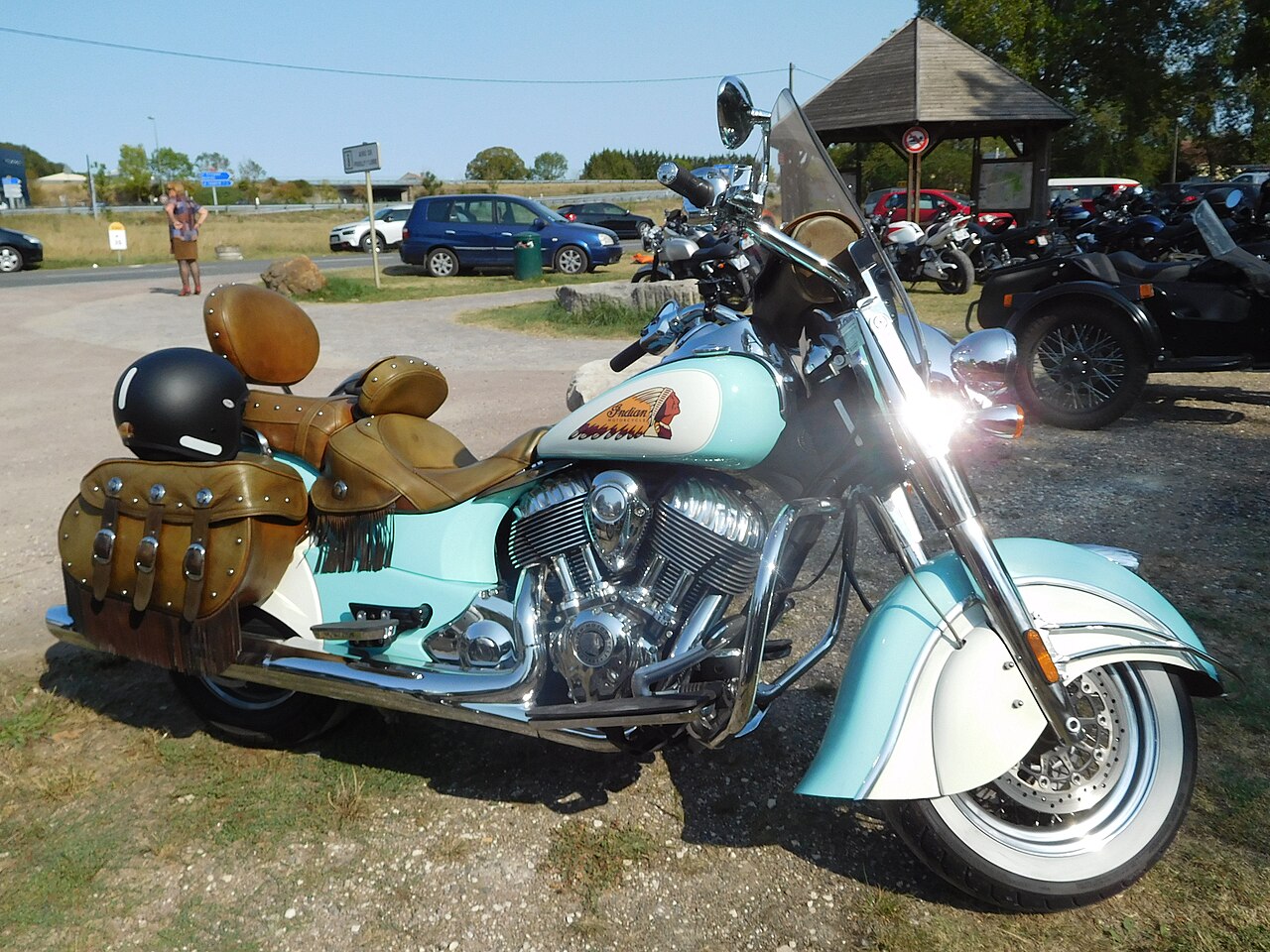

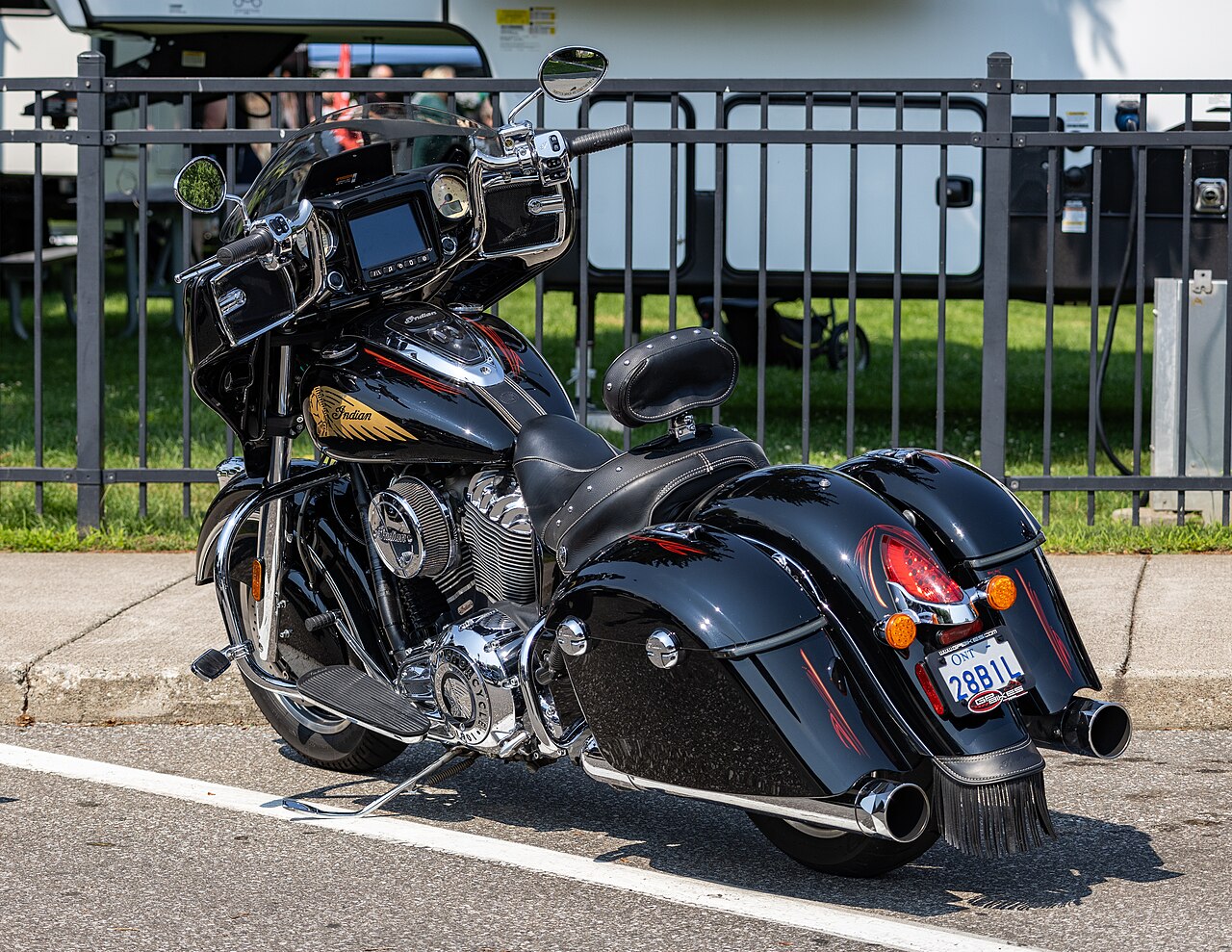

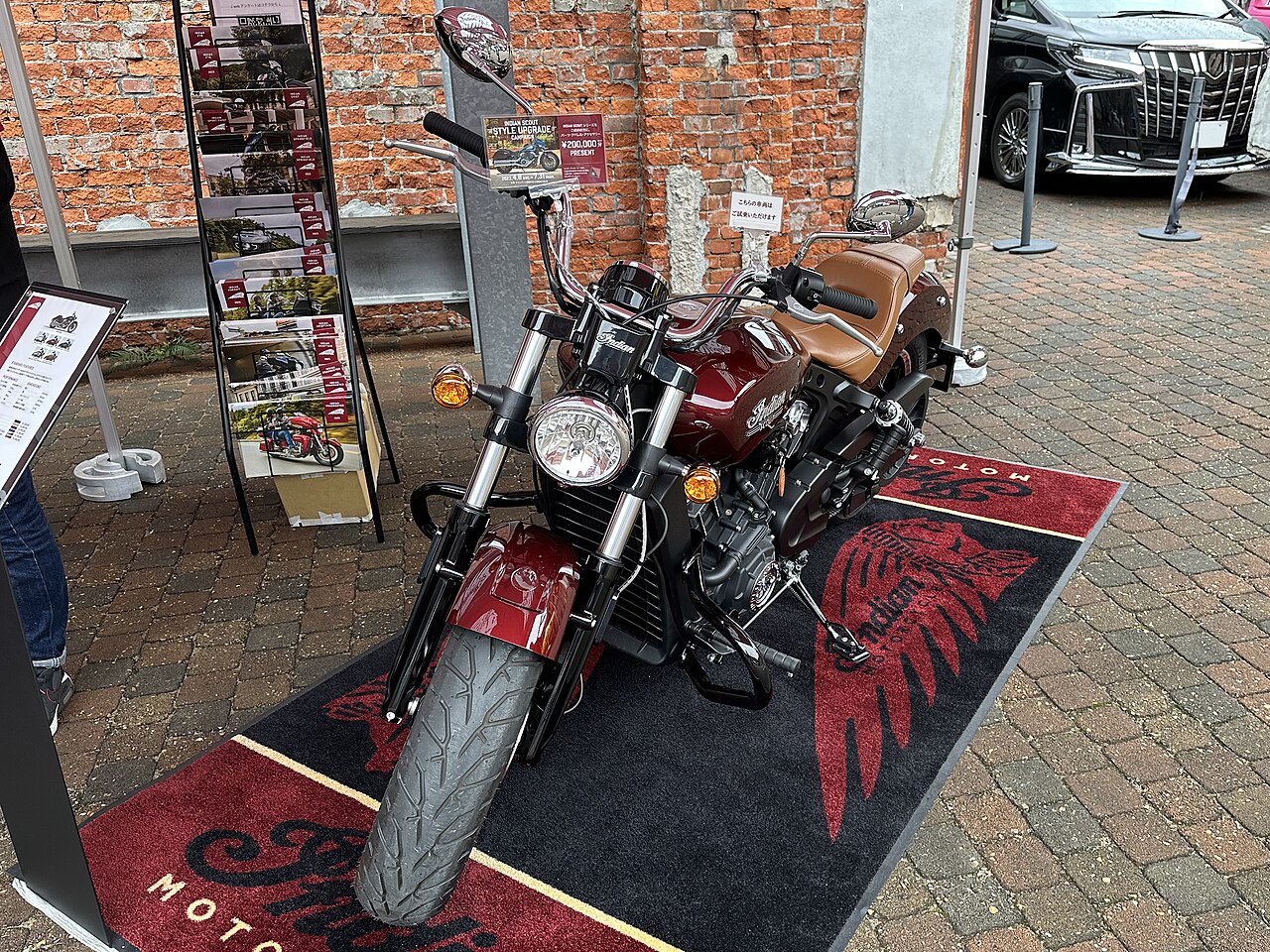
In 2015, Indian relaunched the Scout — the first Scout in more than 70 years — a modern liquid-cooled 1,133cc V-twin cruiser aimed at Harley's Sportster, which promptly won Motorcycle.com's Motorcycle of the Year award. The Scout Sixty (999cc) followed in 2016 as a lower-priced entry model. Polaris closed the underperforming Victory brand in 2017 to put all its resources behind Indian. New platforms followed: the Springfield (2016), the sporty FTR 1200 (2019), and in 2020 the Challenger bagger with the all-new liquid-cooled PowerPlus engine, expanded into the Pursuit touring model. In 2021, for the Chief's 100th anniversary, Indian launched a completely reimagined Chief family.
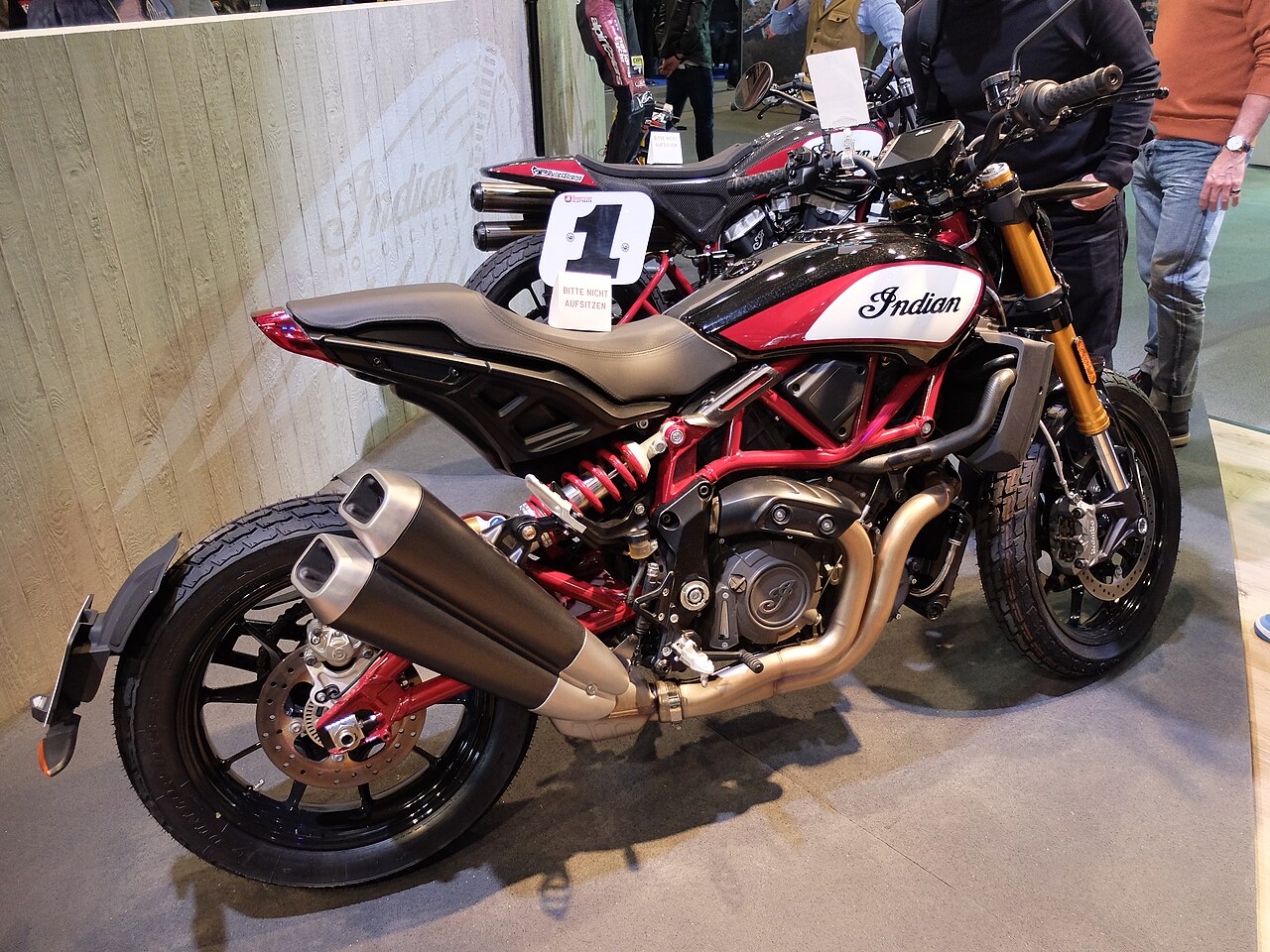

On the track, the reborn Indian became a genuine threat to Milwaukee again: the brand won six consecutive SuperTwins championships in American Flat Track racing and developed a dominant presence in MotoAmerica's King of the Baggers series. The modern rivalry was rekindled on every front — Chieftain versus Street Glide, Roadmaster versus Ultra Limited, Scout versus Sportster, Challenger versus Road Glide — as the two American icons competed for the same riders.
Independence: Carolwood and Today (2025–2026)

On October 13, 2025, Polaris announced it would spin off Indian Motorcycle and sell a majority stake to Carolwood LP, a Los Angeles private-equity firm. The transaction was completed in February 2026, making Indian a fully independent company again after fourteen years under Polaris. Roughly 900 workers — designers, engineers, and manufacturing at Spirit Lake, Iowa, and Monticello, Minnesota — moved with the sale. New CEO Mike Kennedy declared the brand would be "laser-focused" on its core: cruisers, baggers, and touring, with no immediate plans for electric bikes, small-displacement machines, or the discontinued FTR line.
The 2026 model year, announced in November 2025, is the first under independent ownership: a new Sport Scout RT and Sport Scout Sixty head the Scout range; the Chief family continues on the air-cooled Thunderstroke 116 (1,890cc) engine; and the baggers and tourers — Challenger, Chieftain PowerPlus, Pursuit, and Roadmaster PowerPlus — run on the liquid-cooled PowerPlus 112 (1,834cc) engine. To mark 125 years since Hedstrom's first prototype, Indian has promised a series of special anniversary builds through 2026 and renewed its factory commitment to King of the Baggers racing with Vance & Hines. The company that began with three hand-built machines in 1901 remains in business, more than a century after the last Springfield Indian rolled off the line.
The Rivalry with Harley-Davidson in Perspective
Few industrial rivalries are as old, as passionate, or as enduring as that between Indian and Harley-Davidson. It is a rivalry that spans more than a century and almost the entire history of the American motorcycle:
• Origins — Indian (1901) and Harley-Davidson (1903) were founded within two years of each other, and both were quintessentially American products, competing for the same riders, same races, and same roads.
• Early supremacy — Indian led from the start, becoming the world's largest motorcycle maker by 1911 and holding a 41 percent share at its 1913 peak.
• The turning point — World War I changed everything: Indian's mishandled war production starved its dealers, while Harley managed the balance better. In 1922 Harley-Davidson overtook Indian and never lost the lead.
• Racing wars — From the board tracks of the 1910s and 1920s to the Class C era of the 1930s, the two brands traded victories in front of enormous crowds; Indian's Ed Kretz won the first Daytona 200, Harley's "Wrecking Crew" dominated the dirt.
• Survival — When Indian closed in 1953, Harley-Davidson stood alone. Indian's name limped on through half a century of false restarts while Harley survived — even its troubled AMF years of 1969-81 — as the lone American manufacturer.
• Rebirth — Since Polaris relaunched Indian in 2013-15, the rivalry has been fully renewed, this time as a commercial contest between a century-old giant and a reborn challenger competing head-to-head in cruisers, baggers, and touring — and on the race tracks Indian now wins.
The two companies are inseparable in history. Indian defined the early era and produced some of the most beautiful American motorcycles ever made; Harley-Davidson outlasted it and became the symbol of American motorcycling. Their rivalry — red versus black, Springfield versus Milwaukee — made American motorcycling what it is, and it continues today.
Bibliography & Sources
Official and corporate sources:
• Indian Motorcycle, "History: Becoming Legendary," "Tumultuous Times and the Fight for Survival," and "Indian Motorcycle Returns, Stronger Than Ever," indianmotorcycle.com.
• Indian Motorcycle, 2026 lineup announcement, November 4, 2025 (PR Newswire).
Reference and press sources:
• "Indian Motorcycle," Encyclopaedia Britannica.
• "Indian Motorcycle," Wikipedia (marque history, production dates, ownership timeline).
• American Rider, "Harley-Davidson vs Indian Motorcycle," Parts 1 and 2 (2024).
• Cycle World, "When Indian and Harley-Davidson Reigned Supreme" (1970) and "Harley-Davidson, Survivor of the Fittest" (1965).
• Hagerty Media, "The Long, Twisty Ride of Indian Motorcycles" (2024).
• Motorcycle.com, "Indian Motorcycle History" (2014).
• Motorcycle News (MCN), interviews with Indian Motorcycle leadership, November 2025 and February 2026.
• Visordown and Powersports Business, coverage of the 2026 model-year lineup (November 2025).
• New England Historical Society, "The Glory Days of Springfield's Indian Motocycle" (2014).
• Indian Motorcycle Club of America, "Indian Motorcycle Production Numbers (1901-1953)" (2025).
Photographs:
All photographs are sourced from Wikimedia Commons and used under their stated licenses, with attribution noted beneath each image. Photographers: Daniel Hartwig (CC BY 2.0); David Merrett (CC BY 2.0); Piero (CC BY-SA 3.0); Qflieger (CC BY-SA 3.0); Thilo Parg (CC BY-SA 3.0); Addvisor (CC BY-SA 4.0); Rikita (CC BY-SA 4.0); Cjp24 (CC BY-SA 4.0); Chris Woodrich (CC BY-SA 4.0); Decio "desmodex" (CC BY-SA 2.0); Tokumeigakarinoaoshima (CC BY-SA 4.0); and one public-domain photograph.